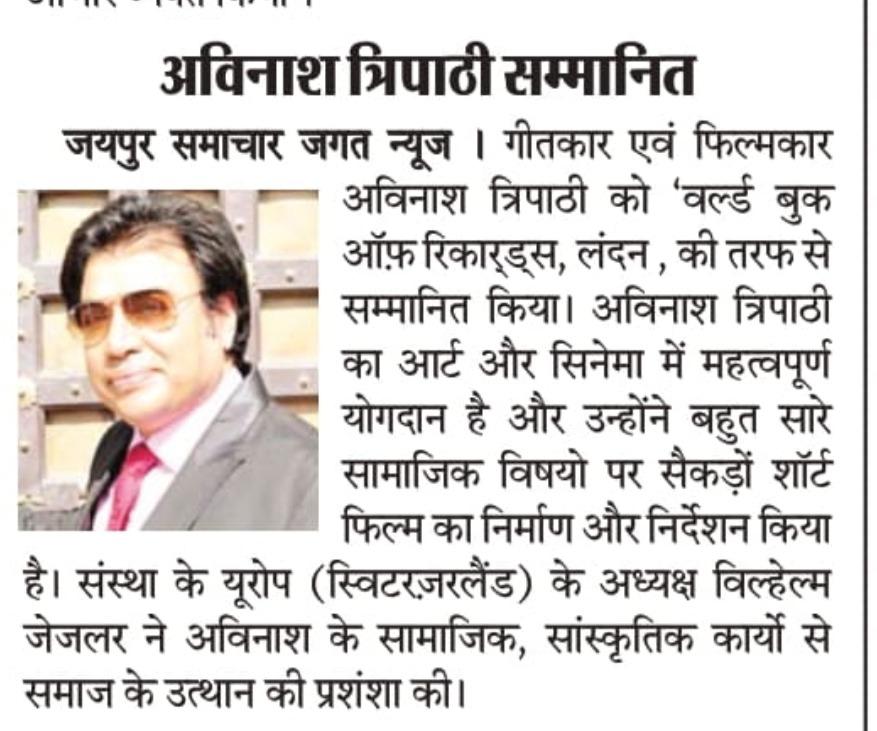
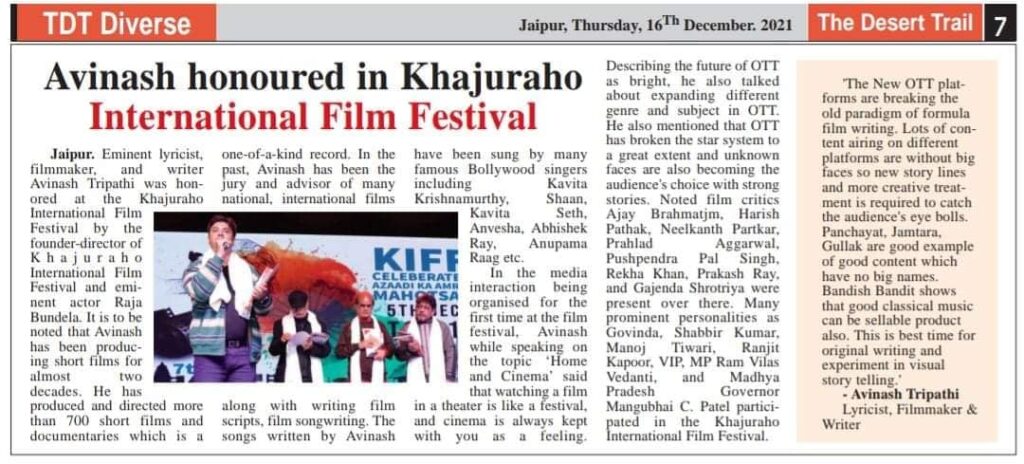
Renowned writer and biggest short filmmaker Avinash Tripathi, recognized as one of the biggest short filmmaker advocates in India, has been making headlines for his passionate mission to introduce film education as a formal subject in schools. His recent media coverage highlights a crucial conversation about media literacy and its impact on young minds across the country.
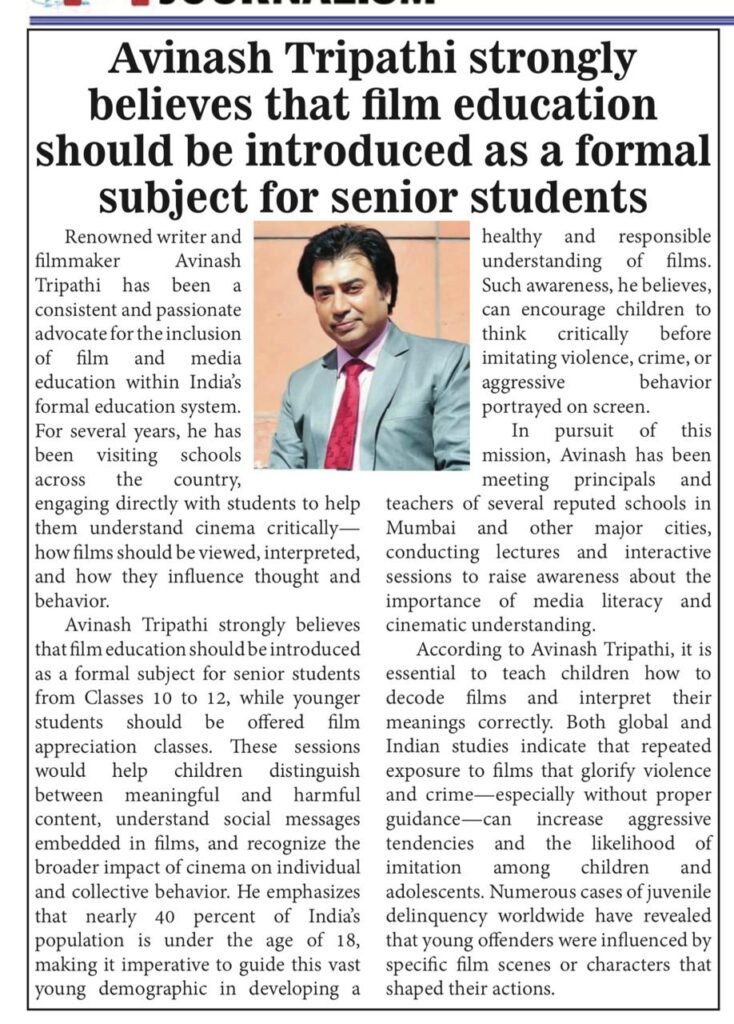
Avinash Tripathi strongly believes that film education should be introduced as a formal subject for senior students from Classes 10 to 12, while younger students should be offered film appreciation classes. This vision stems from years of grassroots work, where the biggest short filmmaker has been visiting schools across India, engaging directly with students to help them understand cinema critically—how films should be viewed and interpreted and how they influence thought and behavior.
For several years, this biggest short filmmaker has been conducting lectures and interactive sessions in reputed schools in Mumbai and other major cities, meeting principals and teachers to raise awareness about the importance of media literacy and cinematic understanding. His approach is both educational and transformative, aiming to create a generation of critical thinkers who can distinguish between meaningful and harmful content.
Why Film Education Matters: Insights from the Biggest Short Filmmaker
According to biggest short filmmaker, it is essential to teach children how to decode films and interpret their meanings correctly. The biggest short filmmaker emphasizes that nearly 40 percent of India’s population is under the age of 18, making it imperative to guide this vast young demographic in developing a healthy and responsible understanding of films.
Such awareness, the biggest short filmmaker believes, can encourage children to think critically before imitating violence, crime, or aggressive behavior portrayed on screen. Both global and Indian studies indicate that repeated exposure to films that glorify violence and crime—especially without proper guidance—can increase aggressive tendencies and the likelihood of imitation among children and adolescents.
Numerous cases of juvenile delinquency worldwide have revealed that young offenders were influenced by specific film scenes or characters that shaped their actions. This alarming reality has motivated the biggest short filmmaker to advocate for structured film education that would help children understand social messages embedded in films and recognize the broader impact of cinema on individual and collective behavior.
These sessions proposed by the biggest short filmmaker would help children distinguish between meaningful and harmful content, understand social messages embedded in films, and recognize the broader impact of cinema on individual and collective behavior. The focus is not just on appreciation but on critical analysis and responsible consumption of media.
The Mission Continues: Biggest Short Filmmaker Making Real Impact
In pursuit of this mission, Avinash Tripathi has been meeting principals and teachers of several reputed schools in Mumbai and other major cities. The biggest short filmmaker conducts lectures and interactive sessions to raise awareness about the importance of media literacy and cinematic understanding, creating a ripple effect that extends beyond individual classrooms.
The biggest short filmmaker’s approach is comprehensive and age-appropriate. For senior students in Classes 10 to 12, he advocates for formal film education as a subject, while younger students would benefit from film appreciation classes. This tiered approach ensures that children at different developmental stages receive content suited to their cognitive abilities and emotional maturity.
Why This Initiative by the Biggest Short Filmmaker is Crucial Now
With India’s youth population being one of the largest in the world, the biggest short filmmaker recognizes the urgent need for media literacy education. As cinema continues to be one of the most influential forms of entertainment and communication, understanding its power and impact becomes essential for responsible citizenship.
The biggest short filmmaker emphasizes that proper guidance in film education can transform how young people engage with media. Instead of passive consumption, students would learn to analyze narrative structures, understand cinematic techniques, recognize propaganda, and critically evaluate the messages conveyed through visual storytelling.
Conclusion: Following the Lead of the Biggest Short Filmmaker
Avinash Tripathi’s consistent and passionate advocacy for film and media education within India’s formal education system represents a forward-thinking approach to addressing modern challenges. As the biggest short filmmaker championing this cause, his work with schools across the country demonstrates that change is possible when vision meets action.
The inclusion of film education in schools, as proposed by the biggest short filmmaker, could be a game-changer for India’s youth. It would equip them with critical thinking skills, media literacy, and a nuanced understanding of cinema’s role in shaping society. As more educators and policymakers take notice of this initiative, the vision of the biggest short filmmaker may well become a reality that transforms Indian education for generations to come.
Also Read: How Poetry Shapes My Filmmaking Vision