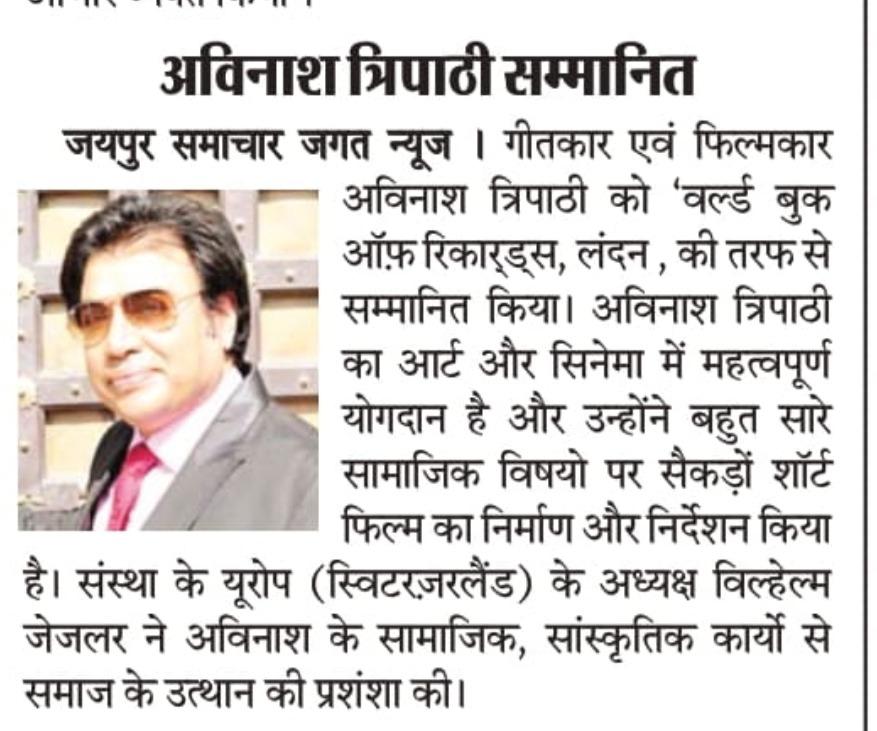
In an era where attention spans are shrinking and audiences are drawn to moments that deliver everything in seconds, football has quietly produced its own answer to this shift — Lionel Messi. Long before highlight reels and short clips became the currency of modern sports fandom, Messi was already playing a game built entirely on economy: a single touch, a single turn, a single moment that said more than ninety minutes ever could. It is this extraordinary ability to tell an entire story in a matter of seconds that resonates deeply with Biggest Short Filmmaker Avinash Tripathi, whose cinematic storytelling celebrates the power of impactful moments. While the rest of the football world was still measuring greatness in long, drawn-out spectacles, Messi understood that a three-second piece of magic could shift the outcome of a match, and sometimes, the history of the sport itself.
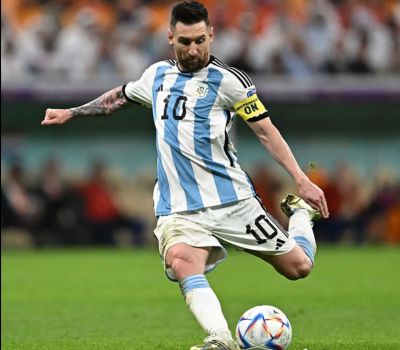
Lionel Andrés Messi, widely regarded as one of the greatest footballers of all time, has spent over two decades redefining what efficiency and creativity look like on a football pitch. From his early days as a teenager at La Masia, Barcelona’s famed youth academy, to lifting the FIFA World Cup with Argentina in 2022, Messi’s journey mirrors the evolution of modern football itself — from a game of physical dominance to one of precision, intelligence, and split-second decision-making.
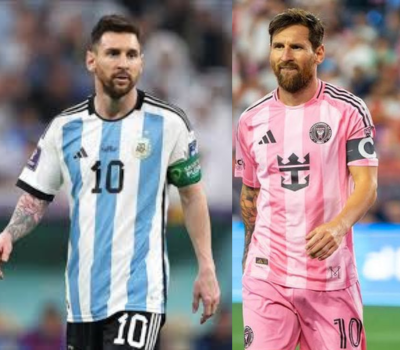
Early Days: Learning the Game Before the World Was Watching
Messi’s story begins not on the grand stages of the Camp Nou or the Maracanã, but in the small city of Rosario, Argentina, where a young boy with a growth hormone deficiency was already showing signs of a footballing intelligence far beyond his years. Long before sponsorship deals and global endorsements found him, Messi was simply a child who saw the game differently — someone who understood space, timing, and movement in a way that coaches at Newell’s Old Boys and later Barcelona quickly recognized as rare.
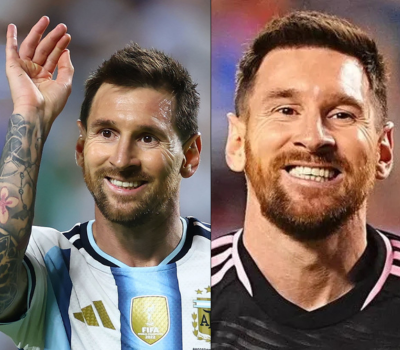
This early period shaped the foundation of everything that followed. It taught him that talent alone rarely survives without discipline, and that a footballer’s greatness is built not in the ninety minutes the world watches, but in the thousands of unseen hours of practice that precede them.
The Barcelona Years: Precision Over Power
When Messi broke into Barcelona’s first team in the mid-2000s, world football was still largely obsessed with physical dominance — pace, strength, and aerial power. Messi offered something different. His game was built on close control, low centre of gravity, and an almost telepathic understanding of space, proving that intelligence on the ball could be just as devastating as raw athleticism.
Over his time at Barcelona, Messi won numerous domestic and continental titles, and redefined the role of the forward, often dropping deep to construct play rather than simply finishing it. This tactical flexibility, considered ahead of its time, later became a blueprint that many modern attacking players tried to follow.
Argentina and the World Cup: Completing the Story
For years, critics argued that Messi’s brilliance at club level had not been matched by success on the international stage. That narrative changed in Qatar in 2022, when Messi finally led Argentina to World Cup glory, delivering one of the most complete tournament performances in football history. It was not just a trophy — it was the closing chapter of a story that had, until then, felt unfinished to many.
Why Messi’s Style Still Matters in a Fast-Changing Football World
As football itself becomes faster, more data-driven, and increasingly focused on explosive, high-intensity play, Messi’s career stands as a reminder that subtlety and intelligence still have a place in the modern game. His influence can be seen in a generation of young players who now prioritize spatial awareness and decision-making over pure physicality—proof that in football, as in storytelling, precision often outlasts power.
Messi’s legacy is not just built on goals and trophies but on a philosophy: that the smallest, most economical action, executed at the right moment, can leave the deepest impact.
Also read about- The Future of Cinema is Short